
Mobile Checkout Overhaul Drives 18% Revenue
Checkout architecture redesign introducing modular elements and selective transactional logic to eliminate mobile drop-offs and friction.
The Context & Challenge
Within a high-traffic e-commerce platform, a significant performance disparity existed between desktop and mobile conversion rates. To bridge this conversion gap, the project required a mobile-first optimization strategy focused on user behavior bottlenecks.
High cognitive load, premature shipping calculations, and a monolithic layout disrupted the mobile purchase flow. Data highlighted critical friction points precisely where users were required to make high-stakes commitments.
While data showed users frequently utilized the cart as a temporary wishlist, the core challenge was an interface that amplified cognitive overload during high-stakes actions like shipping selection and payment input.
The Strategy
The strategy shifted the interface from a rigid, monolithic list into a decoupled, modular component architecture. The primary objective was to isolate information and give users clear context at every decision point.
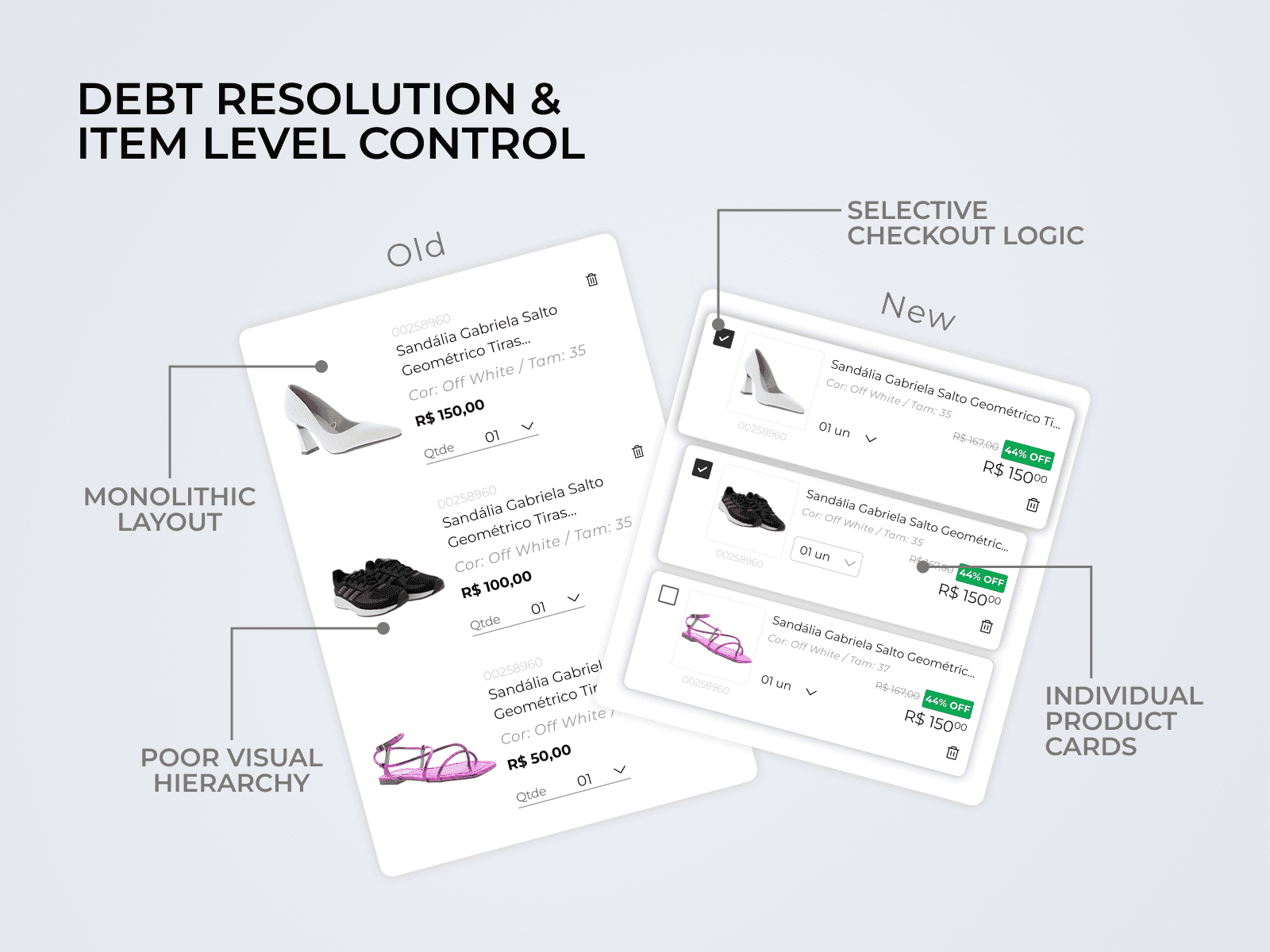
By physically separating products into individual cards within the cart and isolating logistics profiles during the shipping phase, the design reduced visual noise on smaller viewports, allowing users to process one decision at a time.
Leveraging the brand's existing Figma design system, this architectural shift aimed to maintain persistent critical information and introduce clearer CTA affordances to optimize the conversion path.
The Execution
The execution translated this modular strategy into production-ready mobile interface components. The monolithic layout was replaced by independent product modules.
As a tactical addition from user research, selective checkout checkboxes were integrated, allowing users to isolate items for immediate purchase while saving others.
Logistics and fulfillment data were separated into independent cards per package to eliminate premature global shipping calculations.
High-stakes payment inputs and summary details were restructured to remain persistent, maintaining clear visual hierarchy to accelerate checkout completion.


The Outcome
Increase in Mobile Conversion Rates.
Increase in overall E-commerce Conversion Rate.
Decrease in Cart Abandonment rate